
Cavalier Feeding and Weight Guide
7 min read · Updated July 2026
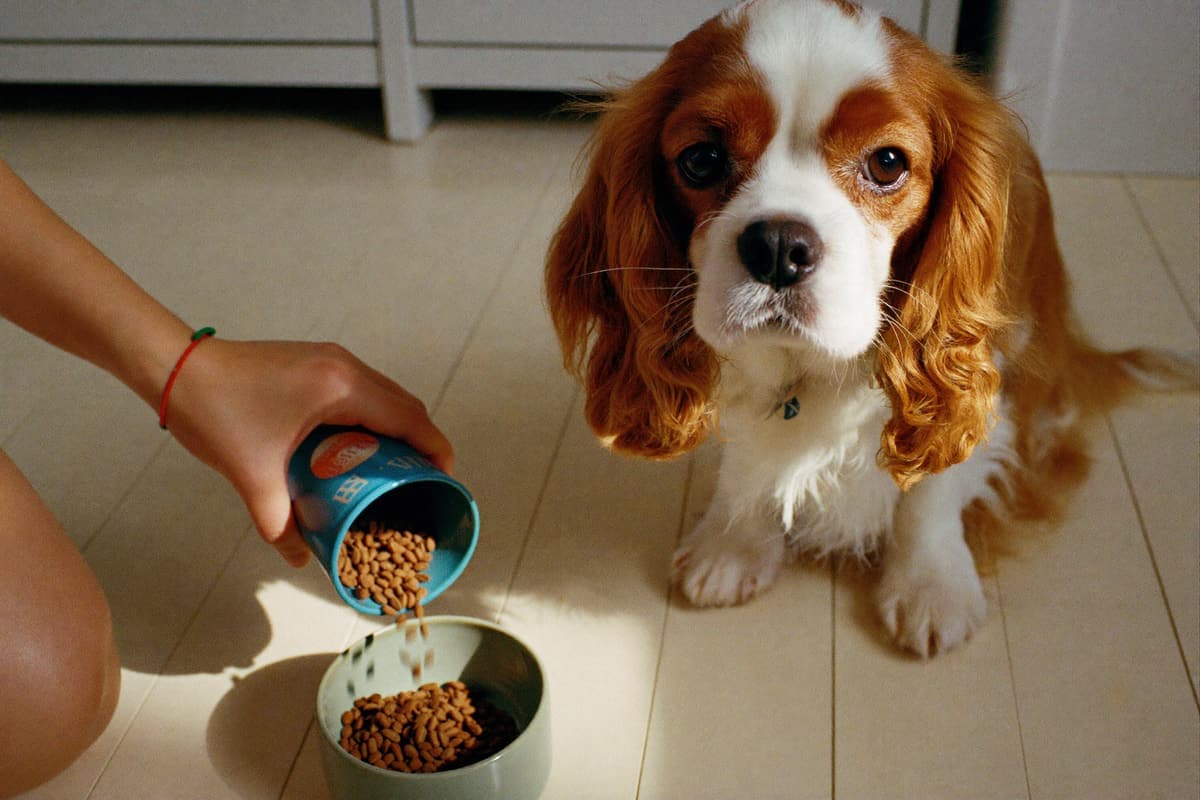
Cavaliers are famously, endearingly food-motivated. That's part of what makes them so trainable and so much fun to have around, and it's also exactly why weight creep sneaks up on this breed more than most. None of this is about strict dieting or anxiety over the scale. It's about a few honest habits that keep a food-loving dog at a healthy weight through the years, plus what a sitter needs to know to keep a stay on track.
The food-motivated breed problem
A Cavalier will act thrilled about food whether they're genuinely hungry or already full; that enthusiastic reaction isn't a reliable signal of actual need. This is worth knowing going in, because it's easy to read "begging like they're starving" as "definitely needs more food" when it's really just... being a Cavalier. Owners who know this about their own dog usually aren't fooled by it anymore. Sitters meeting the dog for the first time often are, at first.
Body condition basics, in plain language
You don't need a vet's training to get a rough read on body condition. A few simple checks work:
- Ribs: you should be able to feel individual ribs with light pressure, without deep prodding, but not see them prominently on a Cavalier with a normal coat.
- Waist: looking down from above, there should be a visible narrowing behind the ribs: an hourglass shape, not a straight tube.
- Side profile: the belly should tuck up slightly behind the ribcage rather than hanging level with the chest.
If a dog feels padded enough that ribs are hard to find, or the waist has disappeared into a straight line, that's worth mentioning to the owner (gently, as an observation, not a verdict). Weight changes are something for the owner and their vet to manage together; a sitter's job is just to notice and mention what you saw.
The meal-prep-per-bag handoff
The single easiest way to prevent overfeeding during a stay is portion control set up before drop-off, not guessed at during it. Ask owners to send meals pre-portioned into individual bags or containers, one per meal, rather than a single bag of food and a "about a cup, twice a day" instruction. It removes guesswork entirely, and it means a stay's feeding stays consistent with what the dog gets at home, calorie for calorie.
If an owner hasn't pre-bagged meals, ask for the exact measurement (a specific cup fraction, not "a scoop") and use the same measuring cup or scale throughout the stay rather than eyeballing it differently each time.
The treat budget problem, and the fix
Sitters overfeed treats out of love more often than any other reason. A dog is a little anxious on day one, or extra affectionate, or just extremely good at asking, and treats become the easy way to bond. It adds up fast, especially layered on top of a full meal plan that was already calibrated correctly.
The fix is simple: ask the owner for a treat budget for the stay, same as you'd ask about meals: how many treats per day is normal for this dog, and what counts as a treat versus a meal topper. Some owners are fine with generous treating during a stay since it's a short-term visit; others prefer sitters stick close to the home routine. Either is fine; the point is asking rather than assuming, and using treats for actual training or bonding moments rather than as a response to persistent begging.
A useful trick: pull a few pieces of the dog's regular kibble out of the day's portion and use those as training treats throughout the day. It satisfies the same food-motivated brain without adding calories on top of the meal plan.
Foods never to share
A few common human foods are worth keeping away from any dog, including Cavaliers: chocolate, grapes and raisins, onions and garlic, xylitol (found in many sugar-free gums and some peanut butters, so always check labels), and alcohol. Fatty table scraps, even when not directly toxic, can cause stomach upset that turns a pleasant stay into an unpleasant one for everyone. When in doubt about a specific food, skip it and ask the owner later rather than offering it during the stay.
Weight and heart health, said gently
Extra weight puts additional strain on a dog's heart and joints, and for a breed where heart health is already something many owners pay close attention to, keeping weight in a healthy range is one of the simplest things an owner can control. This isn't meant as pressure or alarm; plenty of Cavaliers carry a few extra pounds without any issue, and it's a conversation between an owner and their vet, not something to self-diagnose from a checklist. It's simply one more reason the meal-prep habit and treat awareness described above are worth keeping consistent, stay after stay, rather than letting portions drift over time.
FAQ
My sitting dog is clearly still hungry after meals. Should I give more food?
Not without checking with the owner first. A Cavalier's enthusiasm after a meal usually reflects the breed's food motivation rather than genuine hunger, so ask the owner what's normal before adjusting portions.
How many treats per day is too many during a stay?
There's no universal number; it depends on the dog's size, activity level, and what the owner considers normal. Ask for a specific treat budget at drop-off rather than guessing, and lean toward kibble-as-treats if you're unsure.
What if I notice the dog seems overweight but the owner hasn't mentioned it?
Mention it gently as an observation ("I noticed the waist felt less defined than I expected") rather than a diagnosis. Weight management is a conversation for the owner and their vet, not something a sitter should act on unilaterally.
Is it okay to give a Cavalier fruits and vegetables as treats?
Many are fine in small amounts (plain carrots, blueberries, and green beans are common favorites), but always check with the owner first and avoid grapes, raisins, and anything from the never-share list above.
Every CavSwap Cav Card includes the owner's feeding notes and treat preferences, so portion control never has to be guessed at during a stay. Pair this with the grooming and ear care guide for the rest of the daily routine, or see what a dog-sitting swap actually is for the bigger picture. Want a sitter who keeps your Cavalier's mealtimes exactly as they are? Join the circle.