
Cavalier Heart Murmur: A Sitter's Checklist
7 min read · Updated July 2026
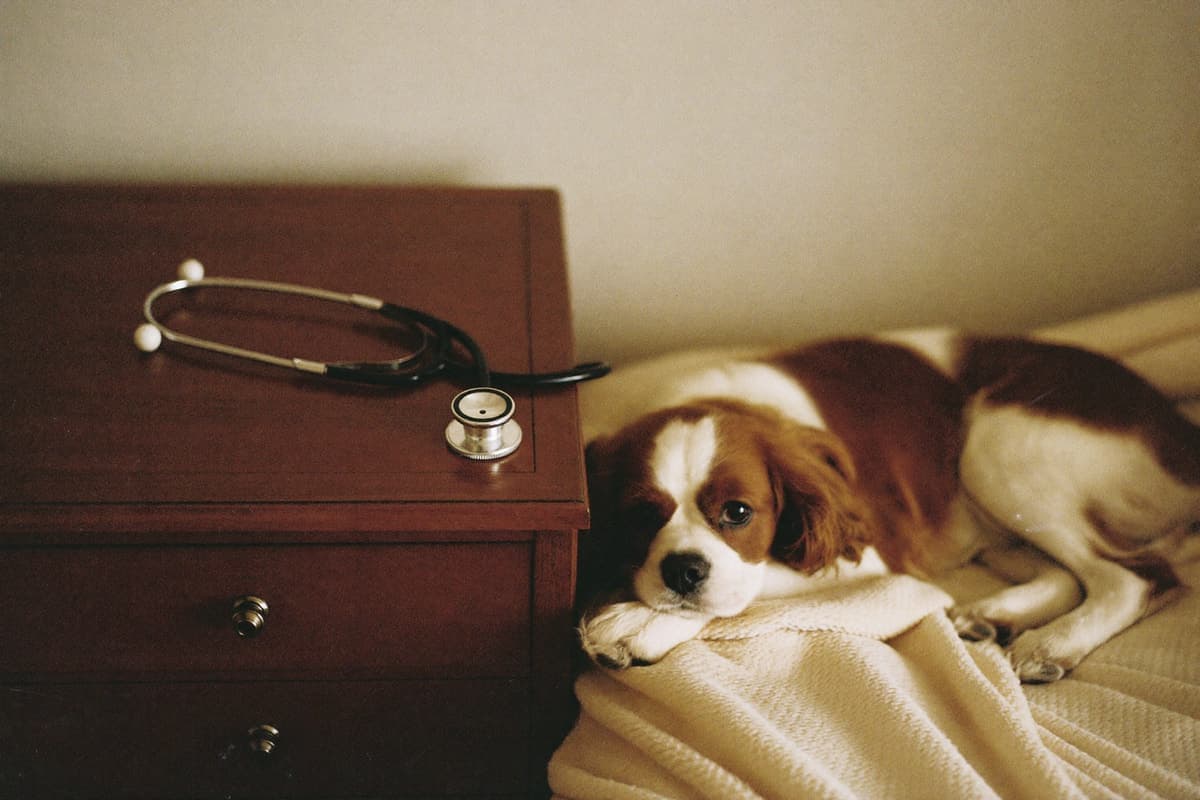
A Cavalier's heart murmur is graded from 1 to 6 by how loud it is, not by how sick the dog is. For a sitting stay, the grade matters less than knowing the dog's normal, their medication schedule, and the signs that mean you call the owner or the vet.
If you've spent any time around Cavaliers, you already know the basics of the breed's heart story: mitral valve disease (MVD) is common enough that most owners bring it up before you even ask. That's a good thing. It means you're not starting from zero. This is the handoff that turns "I know Cavaliers have heart stuff" into "I know exactly what to watch for during this specific stay."
None of this is meant to make you nervous. A dog with a well-managed murmur can have a completely normal, happy sitting stay: walks, naps, zoomies in the yard, all of it. The goal here is just to make sure you and the owner are speaking the same language before drop-off.
What a murmur grade actually tells you
Vets grade heart murmurs on a scale of 1 to 6 based on how loud they are through a stethoscope, not how sick the dog is. A grade 2 murmur can belong to a dog who's asymptomatic and living a normal life; a grade 5 or 6 usually means the owner and their vet are actively managing symptoms with medication and monitoring. The grade alone doesn't tell you what to expect; the owner's day-to-day description does.
So don't worry about memorizing what the number means. Instead, ask the owner to translate it into plain terms: is their dog currently showing any symptoms, or is this a "watch and recheck annually" situation? That answer matters far more than the grade itself.
Questions to ask before the stay
Work through these with the owner at the meet-and-greet, and write the answers down on the Cav Card or your own notes:
- What's the current murmur grade, and when was the last cardiology check-up or recheck?
- Is your dog on heart medication right now? If so, what, and on what schedule? (Save the specifics for the med sheet; you just need to know it exists.)
- Has your dog had any coughing, especially at night or after lying down?
- Does your dog tire more easily than a typical Cavalier on walks, or seem fine?
- What's your dog's resting respiratory rate, and how do you usually count it?
- Who's your emergency contact if I can't reach you, and do you have a preferred emergency vet nearby?
That last question matters more than people expect. You want a name and a general location in your pocket before you need it, not while you're looking it up in a panic.
How to count resting respiratory rate
This is the single most useful skill in this whole checklist, and it takes thirty seconds. While your Cavalier is fully asleep (not just resting, actually asleep), watch their chest and count each full breath (one inhale plus one exhale counts as one) for 30 seconds, then double it. That's breaths per minute.
A relaxed, sleeping Cavalier without heart concerns is usually well under 30 breaths per minute. Ask the owner what's normal for their specific dog, since baselines vary a little dog to dog, and if they're already tracking it at home, ask what number makes them want a vet call. Do this once or twice during a longer stay so you have a real baseline, not a guess.
What's normal, what's a call, what's urgent
Normal and no action needed: panting after play or in warm weather, a brief cough after drinking water too fast, needing a slower pace on hot afternoon walks, sleeping more than an energetic breed would.
Call the owner (not an emergency, but worth a check-in): a new cough that wasn't mentioned at drop-off, noticeably faster breathing at rest than the baseline you counted, more reluctance to do normal activity, appetite changes over more than a day.
Get to an emergency vet now, then call the owner: labored or open-mouth breathing at rest, blue or pale gums, collapse or fainting, extreme lethargy that doesn't respond to rest, or a resting respiratory rate that's climbed well above the baseline the owner gave you. Trust your gut here: if something feels seriously wrong, act first and explain after.
Pacing exercise and heat
Cavaliers with a murmur usually don't need to skip walks; they need pacing. Shorter, more frequent outings tend to work better than one long one, especially in warmer months. Walk during the cool parts of the day, bring water on anything longer than a quick loop, and let the dog set the pace rather than a leash-length ahead of you. If a dog wants to stop and sniff for a while mid-walk, that's not stubbornness. Let them.
Heat is the bigger risk factor day to day. A hot car, a sunny yard with no shade, or a midday walk in July can push a dog with reduced cardiac reserve into trouble faster than it would an unaffected dog. Keep stays air-conditioned, keep water available at all times, and treat "let's just stay in today" as a perfectly good plan on the hottest days.
Sleeping position notes worth knowing
Some owners notice their dog sleeps propped up or prefers an elevated bed when a murmur is more advanced; it can be more comfortable for breathing. If the owner mentions this, honor whatever setup they use at home rather than assuming a flat dog bed is fine. It's a small detail, but continuity helps dogs settle into a new place faster anyway.
FAQ
Does a heart murmur mean I shouldn't take the dog on walks?
No. Pacing, not avoiding, is the goal for most murmur grades. Ask the owner what their normal walk routine looks like and match it, adjusting for heat.
What if the owner didn't mention a murmur at all?
Ask directly. Cavalier owners are usually forthcoming, but ask anyway during the meet-and-greet, along with the same questions above, so nothing gets missed by assumption.
Is a cough always an emergency?
Not always; an occasional cough after drinking or excitement can be normal for some dogs. A new, recurring, or nighttime cough that wasn't part of the baseline is worth a call to the owner the same day.
How do I know what's "normal" for this specific dog versus normal for the breed?
That's exactly why the pre-stay questions matter: ask the owner for their dog's specific baseline rather than relying on general breed knowledge, and note it on the Cav Card.
Every CavSwap stay hands the sitter a printed Cav Card with exactly this information filled in ahead of time, so none of it has to be reconstructed from memory at drop-off. Pair this with the medication guide for sitters if the dog is on heart medication, and see the meet-and-greet checklist for how to work through these questions in person. When your Cavalier's heart needs watching, another owner is the sitter you want. Join the circle.