
Dog Boarding Cost in Orange County (2026)
8 min read · Updated July 2026
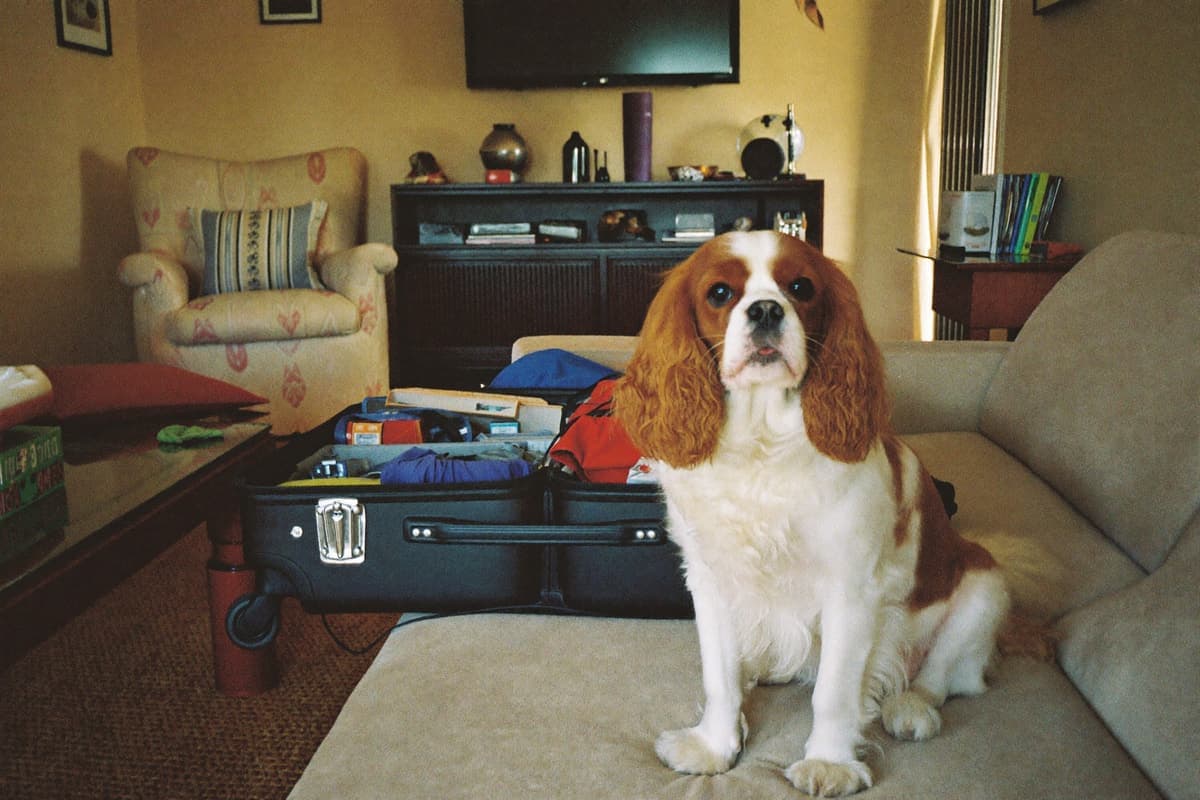
Boarding a Cavalier in Orange County runs about $35 to $107 a night in 2026, or roughly $630 to $1,500 for two weeks, depending on whether you choose a traditional kennel, cage-free daycare-boarding, or an in-home sitter.
If you've priced out a week of dog boarding in Orange County lately, you already know the sticker shock. Rates vary by option, by dog, and by season, but almost every route to "someone else watches my dog" costs real money, and for a Cavalier specifically, it tends to land toward the higher end. Here's how the math breaks down, option by option, using typical published rates as of mid-2026.
A quick note before the numbers: every figure below is a range, not a quote. Individual businesses set their own pricing, and rates shift with demand, location within the county, and your dog's specific needs. Treat these as a planning tool, not a guarantee.
The four common options, and what they typically run
Traditional kennel boarding. Your dog stays in a run or kennel, usually with scheduled group or solo yard time. Typical published nightly rates in Orange County run $35–$55 per night for a dog Cavalier-sized or smaller, with extra charges common for anything beyond the base package: additional walks, extra playtime, a private yard rotation.
Cage-free / boutique boarding. Facilities marketed as cage-free or home-style tend to run higher (typically $50–$85 per night), reflecting smaller group sizes and more one-on-one attention. For an anxious, people-oriented breed like the Cavalier this is sometimes worth the premium, but it's still a facility with staff rotating through shifts rather than one consistent person.
In-home sitter apps. Booking an independent sitter through an app typically runs $35–$75 per night for the base stay, before the platform's own service fee is layered on top; the number you see first usually isn't the number you pay. Quality varies sitter to sitter, since these are individual contractors rather than one accountable business.
Vet-supervised medical boarding. For a dog on a complex medication schedule, typical published rates run $60–$120+ per night, depending on the monitoring level. This is the option many Cavalier owners default to once a heart murmur or other condition is in the picture, even when the dog doesn't strictly need that tier day to day (the "at least someone medical is there" instinct).
The two-week worked example
Say you're traveling for two weeks (14 nights) and comparing realistic options for a single Cavalier:
- Traditional kennel, low end: 14 × $35 = $490, before a plausible medication-administration fee if your dog takes a daily medication (common for Cavaliers on heart or joint support).
- Traditional kennel, higher end with add-ons: 14 × $55 plus the walk add-ons most owners end up wanting for a breed that doesn't do well with minimal exercise lands closer to $900–$1,000.
- Cage-free / boutique, typical: 14 × $65 = $910, before any holiday surcharge if your trip overlaps a peak travel week.
- In-home sitter app, typical with service fee: 14 × $55 base plus the platform's service fee commonly lands in the $900–$1,100 range all-in.
- Vet-supervised medical boarding, typical: 14 × $85 = $1,190, and can run past $1,500 at facilities charging toward the top of the range or adding a per-dose administration fee.
Put together, a realistic two-week stay for one Cavalier in Orange County typically lands somewhere in the $840–$1,500 range, depending on which option you choose and how many extras get added along the way, and that's before you've spent a dollar on the trip itself.
The hidden adders that push you toward the top of the range
A few charges surprise first-time boarders, and they matter more for Cavaliers than for a lot of breeds:
- Holiday and peak-season surcharges: often $5–$15 extra per night around major holidays, when everyone travels at once and space is tight.
- Medication-administration fees: a meaningful share of Cavaliers take a daily medication, and most facilities charge extra to give it: often $5–$15+ per day on top of the base rate.
- Multi-dog household pricing: boarding two Cavaliers together rarely gets a straight discount; expect closer to 1.5–1.8x the single-dog rate.
- Extra walks or "premium" add-ons: base packages are often built around minimal daily activity, and a breed that needs regular walks usually needs the add-on tier, not the base one.
Why Cavalier owners often end up paying toward the top
It's not your imagination if boarding a Cavalier costs more than boarding some other breeds. Many Cavaliers are on some form of daily medication by middle age, which triggers administration fees almost everywhere. Owners managing a heart murmur often feel more comfortable paying for the higher-supervision tier even when a facility says it isn't strictly required (a reasonable instinct, not an overreaction). And a companion breed that struggles with kennel-style separation (see our guide to separation anxiety and boarding) sometimes pushes owners toward the pricier, lower-stress cage-free option instead of the cheaper traditional kennel. None of that is a criticism of any facility's pricing; managing a higher-needs stay is real work, and it's fair that it costs more.
The swap alternative
A dog-sitting swap works differently: instead of paying a facility or a sitter, you host another member's dog when they travel, and they host yours when you travel. Nights are tracked in credits rather than dollars: one credit generally equals one night hosted, so a two-week trip costs the credits you've already earned, not a card charge. There's no facility fee, no medication-administration surcharge, and no holiday surcharge, because the model runs on reciprocity between members rather than a paid transaction. For the math above, that turns a $840–$1,500 stay into $0 out of pocket, funded by nights you've already given.
It's not the right fit for every situation (it depends on having hosted enough nights yourself, and on a good match being nearby when you need one), but for Cavalier owners who travel a few times a year, it tends to replace the single biggest recurring cost of dog ownership. If you're also weighing Los Angeles-area pricing, see our Los Angeles boarding cost breakdown for how the same math shifts a county over.
FAQ
Are these prices accurate for every facility in Orange County?
No. These are typical published rate ranges as of mid-2026, meant for planning, not a quote from any specific business. Pricing varies by location, season, and each dog's needs, so confirm directly with a facility before booking.
Why does my Cavalier's boarding always seem to cost more than my friend's Labrador?
Medication-administration fees are the most common driver: Cavaliers are more likely than many breeds to be on a daily medication by middle age, and most facilities charge extra to administer it. Add-on activity packages matter too, since a breed that needs regular walks often doesn't fit the minimal base package.
Is vet-supervised boarding always necessary for a dog with a heart murmur?
Not automatically; it depends on the individual dog's condition and your own vet's guidance. Many dogs with a well-managed murmur do fine at a standard facility; ask your vet what supervision level they'd actually recommend rather than defaulting to the most expensive tier out of caution alone.
How many nights do I need to have hosted before a swap can cover a two-week trip?
It depends on the credit structure for your specific stays (a second dog or a daytime-only stay changes the count), but the general idea is that nights you've hosted convert into nights you can use. Hosting periodically over the year is what makes a longer trip fully covered when you need it.
Every CavSwap host gets a printed Cav Card from the visiting dog's owner before the stay begins, so nothing about medication timing or routine has to be guessed at. If boarding costs like these are part of why you're here, join the founding waitlist to start earning nights toward your next trip, or read what a dog-sitting swap actually is for the full picture of how it works.