
Cavalier Syringomyelia: A Sitter's Checklist
7 min read · Updated July 2026
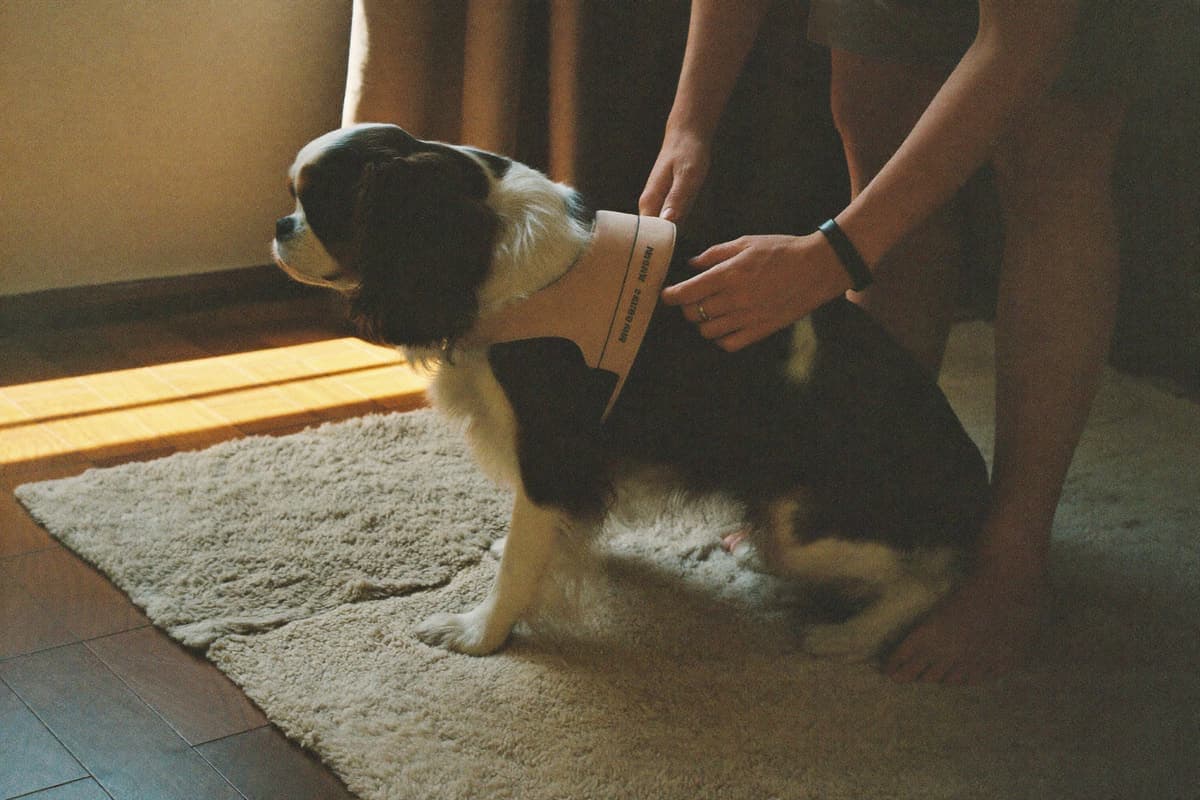
Syringomyelia (often shortened to SM) is one of those conditions that's common enough in Cavaliers that most experienced owners have either dealt with it themselves or know someone who has. If you're sitting for a dog with SM, the good news is that the day-to-day handling is very learnable; it's mostly about knowing what to watch for and adjusting a few habits, not doing anything medically complicated.
This checklist walks through what SM tends to look like in daily life, the handling rules that keep a dog comfortable, and when something crosses from "keep an eye on it" into "call the owner."
What syringomyelia looks like day-to-day
SM affects how fluid moves around the spinal cord, and in Cavaliers it often shows up as neurological quirks rather than anything visibly dramatic. The most common day-to-day signs are:
- Scratching without contact: the dog scratches or paws at their neck, ear, or shoulder area in the air, without actually touching skin. This is sometimes called "phantom scratching" and is one of the more recognizable SM signs.
- Yelping or flinching when picked up or lifted: especially if lifted under the front legs or around the neck/shoulders rather than supported properly.
- Sensitivity around the ears, neck, or harness area: a dog who used to love being scratched behind the ears suddenly pulling away, or reacting to a collar or harness going on.
- Reluctance on stairs or jumping: some dogs slow down or avoid jumping onto furniture they used to hop onto freely.
None of these signs alone means an emergency. Many SM dogs live full, happy lives with these quirks as just part of who they are, especially once an owner has found the right management routine. Your job is to know this specific dog's normal so you can tell if something changes.
Handling rules
A few adjustments make a real difference for a dog with SM:
- Harness, never collar. Neck pressure is the thing to avoid most, so any dog with SM should be walked in a well-fitted harness, not a collar, even for a quick trip outside.
- Support properly when lifting. Scoop under the chest and hindquarters together rather than lifting under the front legs or by the collar/scruff. Ask the owner to show you their preferred lift if you're unsure.
- Watch grooming triggers. Brushing or touching around the ears and neck can trigger scratching or discomfort in some SM dogs. Ask the owner which areas to go gently around, or skip grooming near the neck entirely during the stay.
- Let them set the pace on stairs and furniture. Don't force a jump or a flight of stairs if the dog hesitates; offer a ramp, steps, or a lift instead if that's part of their normal routine.
Medication timing
Many SM dogs are managed with medication such as gabapentin, prescribed to help with nerve-related discomfort. Exact doses and timing vary a lot from dog to dog and change over time with the vet's guidance, so this isn't something to eyeball. Always follow the owner's med sheet exactly as written, including timing relative to meals if noted. If a dose gets missed or the schedule seems unclear once you're mid-stay, call the owner rather than guessing or adjusting anything yourself.
Comfort setup
A few small environmental choices help SM dogs settle in:
- A soft, supportive bed rather than a hard floor, especially somewhere quiet where the dog can nap undisturbed.
- Keeping the home calm, since sudden loud noises or excited jumping from other dogs can sometimes trigger a scratching episode.
- Elevated food and water bowls if that's what the dog uses at home; ask the owner rather than assuming.
- Avoiding rough play that involves grabbing at the neck or shoulders, even in good fun with another dog.
When to call the owner
Reach out to the owner (not urgently, but same-day) if you notice new or worsening scratching episodes, more sensitivity than usual around the ears or neck, a change in appetite, or general reluctance to move around that's new for this dog. These are worth a conversation, not a panic; SM symptoms can fluctuate day to day even in dogs who are well-managed.
When it's an emergency
Get to an emergency vet and then call the owner if you see sudden loss of balance or coordination, one-sided weakness, a dog who seems to be in significant pain and can't settle no matter what you try, or any sudden collapse. These are rare, but they're the signs that mean "don't wait."
FAQ
Is phantom scratching always a sign of syringomyelia?
Not necessarily on its own, but it's a well-known SM sign in Cavaliers. If the owner has already told you their dog has SM, expect this behavior as a known quirk rather than something new to worry about, unless it's clearly worse than what they described.
Can a dog with SM still go on normal walks?
Yes, in a harness rather than a collar. Ask the owner about pace and distance, since some SM dogs do best with shorter, calmer outings, but this varies dog to dog.
What if I'm not sure how to pick the dog up safely?
Ask the owner to demonstrate at the meet-and-greet, or ask for a quick video. It's a completely normal question, and getting it right matters more than getting it fast.
Should I avoid petting the dog near their ears and neck entirely?
Not necessarily; ask the owner what their dog tolerates. Some SM dogs are fine with gentle touch there; others aren't. When in doubt, let the dog approach you rather than reaching for a sensitive spot first.
Every CavSwap stay hands the sitter a printed Cav Card with the owner's specific handling notes, medication schedule, and comfort setup already filled in, so you're never guessing. Pair this with the medication guide for sitters for the missed-dose protocol, and see preparing your Cavalier for a sitting swap for what a good handoff packing list looks like. A sitter who already understands SM is worth a lot. Join the CavSwap circle to find one nearby.