
Cavalier Grooming and Ear Care for Sitters
6 min read · Updated July 2026
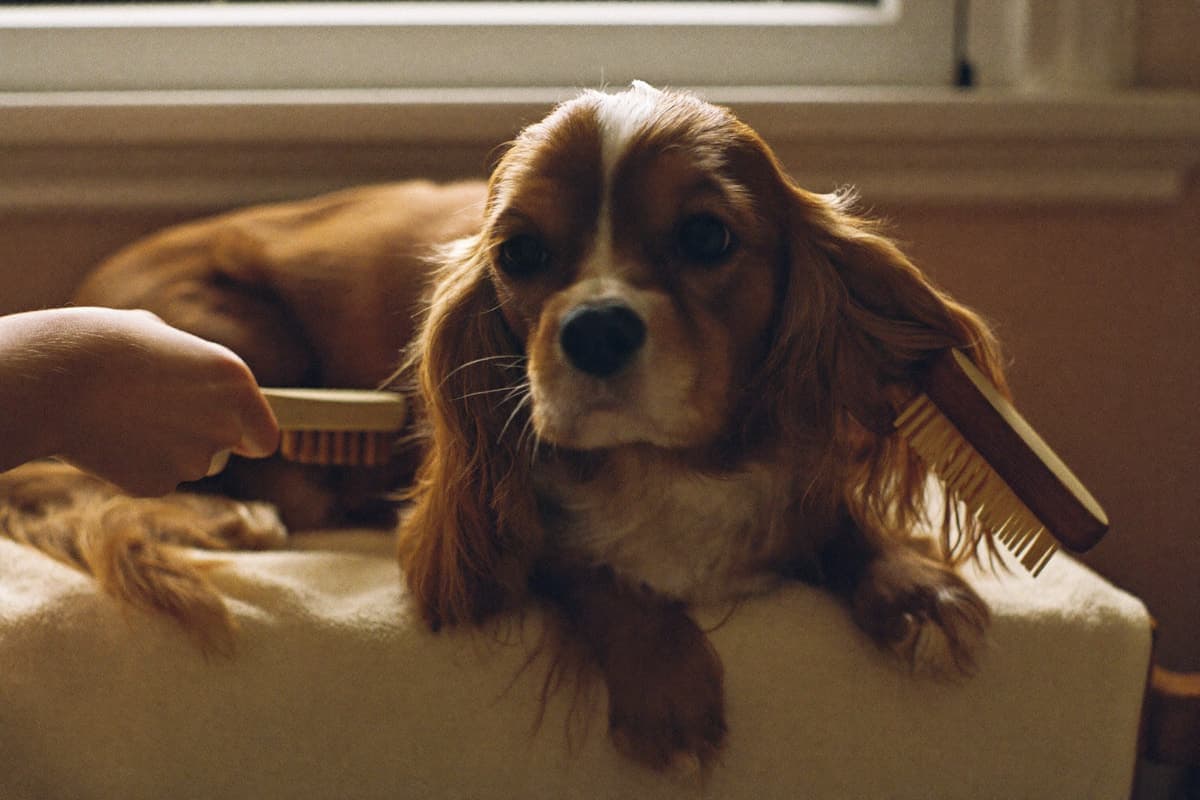
A Cavalier's coat and ears are two of the breed's most recognizable features, and two of the things that need the most regular, low-key attention. None of this requires grooming skills. It's a five-minute daily routine any sitter can keep, plus a clear sense of what to leave alone during a stay.
The daily five-minute routine
Feathering brush-out (2-3 minutes). The long, silky "feathers" on a Cavalier's ears, legs, chest, and tail mat easily, especially after a nap or a day of activity. A quick brush-through with a slicker brush or wide-tooth comb, focusing on behind the ears, under the "armpits," and the tail feathering, prevents small tangles from becoming real mats. If the dog came with their own brush, use that; it matches the coat's usual care and avoids introducing a tool the dog isn't used to.
Ear check (1 minute). Gently lift each ear flap and take a quick look and sniff. A healthy ear should look pale pink inside, smell like essentially nothing, and show no discharge. Cavaliers' heavy, low-hanging ears trap moisture and reduce airflow more than an upright-eared breed, which makes them more prone to irritation, so a daily check catches something small before it becomes uncomfortable for the dog.
Eye wipe (30 seconds - 1 minute). A soft, damp cloth or dog-safe eye wipe around the inner corners of the eyes removes the light tear staining common in the breed, especially if the dog has any discharge built up overnight. This is cosmetic more than medical; skip it if the dog resists and it's not something the owner mentioned as routine.
What a normal ear check looks like versus a call-the-owner check
Normal: pale pink interior, no odor, minimal visible wax, dog doesn't react to a gentle check.
Worth mentioning to the owner, not urgent: slightly more wax than usual, a faint odor that wasn't there the day before, mild head-shaking after a bath or swim (often just water in the ear working its way out).
Worth a same-day call: redness, swelling, a strong or unpleasant odor, visible discharge, the dog pawing at or shaking their head repeatedly and seeming bothered by it, or clear pain when the ear is touched. Ear infections can develop over a couple of days and are far more comfortable to treat early than late, so don't wait out a clearly bothered dog hoping it resolves on its own.
What NOT to do during a stay
A sitting stay is not the time for anything beyond the basics above, even with good intentions:
- No clipping, trimming, or cutting any part of the coat, even a stray mat you're tempted to snip out. A mat that seems bad can usually wait for the owner or their regular groomer; a well-meaning trim can go wrong fast on a coat you don't know.
- No bathing unless the owner specifically asked for it or an obvious mess (mud, something the dog rolled in) makes it necessary. Even then, use the dog's own shampoo if it was sent, since human or wrong-formula shampoo can dry out or irritate the skin.
- No ear cleaning solution unless the owner has specifically provided one and asked you to use it on a schedule. A basic look-and-sniff check is different from applying anything into the ear canal; that's the owner's call, not a default stay task.
- No attempting to remove a mat by hand-pulling. If brushing alone won't work through it, leave it for the owner and just mention where it is.
The long-stay grooming conversation
For a stay longer than a week or so, it's worth asking the owner upfront whether any grooming is due during the window: a nail trim, a professional groom appointment already scheduled, or anything else on the calendar. Some owners are happy to have a sitter handle a scheduled professional appointment (dropping off, picking up); others prefer to handle all grooming decisions themselves after the dog is home. Either way, ask before assuming, the same way you'd confirm any other extended-stay logistics.
Drying after beach or pool days
A Cavalier's dense double coat holds water and takes a while to dry naturally, which matters more than people expect after a beach trip or pool time. A trapped-damp coat, especially around the ears and the feathering, is exactly the environment that irritation and hot spots tend to develop in. Towel-dry thoroughly after any water activity, paying extra attention to the ear flaps and the feathering underneath, and let the dog dry somewhere warm and ventilated rather than a cool, closed room. If you have access to a dog-safe low-heat dryer and the dog is comfortable with it, that speeds things up further, but a thorough towel-dry is enough on its own.
FAQ
The dog has a small mat I could easily brush out. Is that okay?
Brushing through a small tangle with a comb or slicker brush is fine and part of the normal daily routine. It's cutting or hand-pulling a stubborn mat that should wait for the owner rather than being attempted by a sitter.
How do I know if an ear odor is a real problem or just normal dog smell?
A completely healthy ear should smell like close to nothing. Any noticeable odor, especially one that's new or getting stronger day to day, is worth mentioning to the owner the same day rather than waiting to see if it passes.
Should I clean the dog's ears if I have cleaning solution at home?
No. Only use ear cleaning solution the owner specifically provided and asked for. A look-and-sniff check is a normal daily task; applying any solution into the ear canal is a decision that belongs to the owner.
The dog got muddy on a walk. Can I just bathe them?
A quick rinse to remove obvious mud is reasonable, but a full bath with shampoo should wait for the owner unless they've specifically said it's fine. Use the dog's own products if a rinse is genuinely needed.
Every CavSwap Cav Card notes the dog's usual grooming routine and any known ear sensitivity, so a sitter isn't guessing at what's normal. Pair this with the feeding and weight guide for the rest of the daily care routine, or see preparing your Cavalier for a sitting swap for what to pack. For a sitter who keeps up the daily brush and ear check, join CavSwap and find one nearby.